Quitting Google
Last Friday, March 14th, marked the end of my time at Google. Two weeks after giving my notice, I handed in my badge and figurative gun, officially closing that chapter. I wanted to share the story behind my decision, and provide some context for my journey there.
Before I dive in, I want to acknowledge the immense privilege that allows me to write this. While I'll be sharing my concerns about Google's direction over the past few years, I'm deeply grateful for the opportunities and experiences I gained during my time there.
A timeline
Getting into FAANG
In early 2022, I moved to San Francisco seeking a fresh start: i wanted to reconnect with friends, escape a difficult breakup, and advance my career. To be honest, I never expected to land a job in big tech. I'd always viewed it as overly corporate, and I worried about losing my sense of individuality, not to mention my many many failed attempts at getting in in college. Just a month later, with my visa deadline looming only 10 days away, I received a call from a Google recruiter offering me a position. I was overwhelmed with joy. It felt like a significant achievement, fulfilling a long-held ambition, I remember friends and I in college, joking about the plethora of sexual acts we would debase ourselves with for an opportunity like this. After going home for a bit and celebrating with family, I started at Google a couple weeks later.
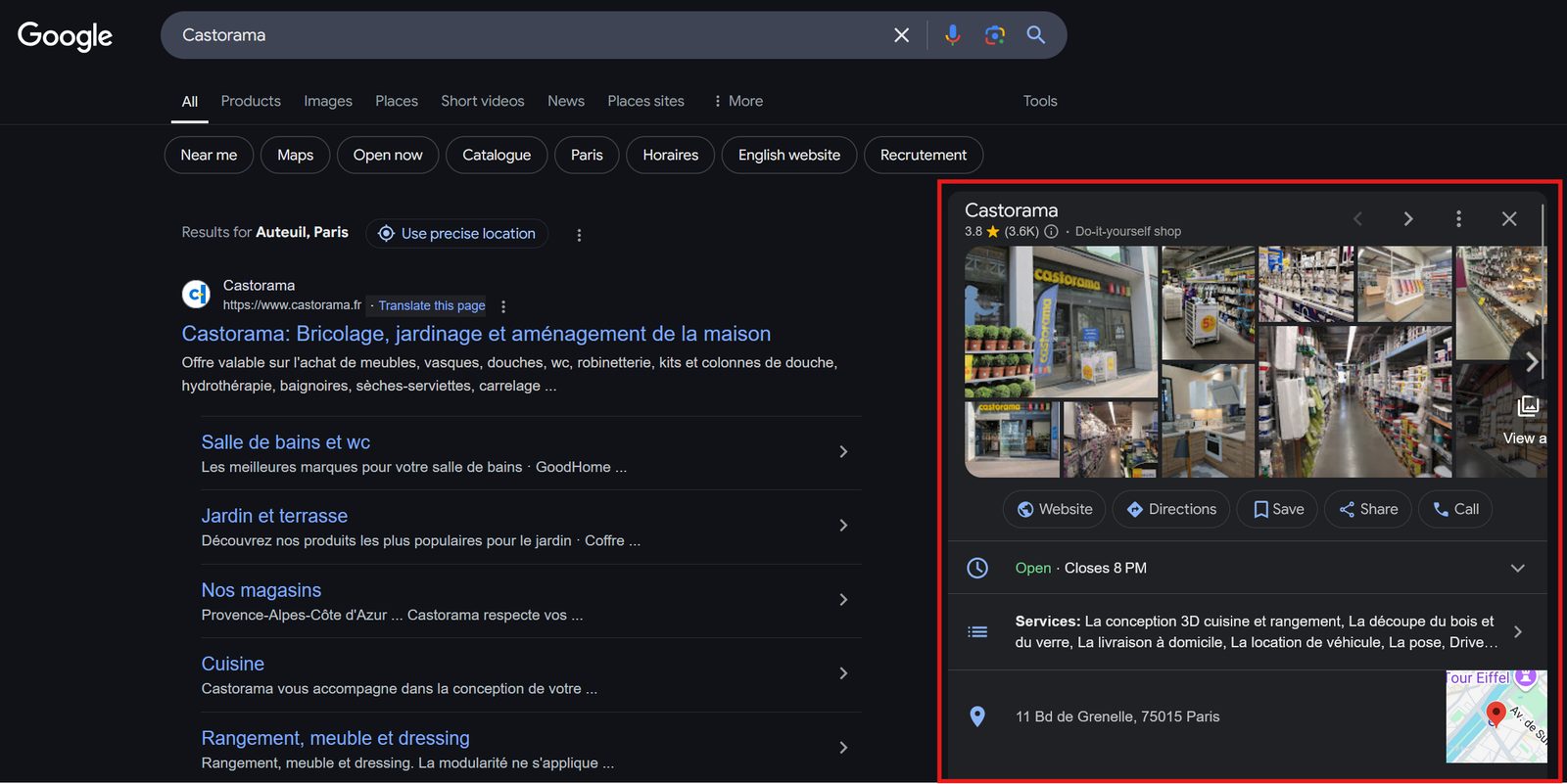
As a Software Engineer in the Merchant side of the Shopping org, my initial role was on the LocalPosts team, where I helped develop the side panel you see when searching for a business on Google, enabling merchants to easily update their information and promote events or discounts
My arrival however significant shift in focus within the Shopping organization. In the aftermath of COVID, leadership prioritized eCommerce integration, and the organization's resources were rapidly redirected toward supporting online businesses.
As a result of this change, my team and I were quickly reassigned to develop a Merchant Targeting Engine. This system would provide internal client teams, such as those working on YouTube, Search, and Ads, with detailed information about merchants, enabling them to tailor their services and marketing efforts more effectively.
What does a Targeting Engine do?
The Targeting Engine I helped build at Google was essentially a system that gathered and processed merchant data, making it accessible through a central API. For instance, we developed a machine learning model that analyzed merchant information, such as opening hours, physical locations, and online presence, to categorize businesses as local, e-commerce, or a hybrid.
We would then store the output of the machine learning model - processed through some map-reduce work - into daily data dumps which would then be read by our API. Each day, we would re-run our data pipelines and had the most accurate and timely information available for clients.
This allowed internal teams, like marketing, to query the API before contacting a merchant, ensuring they had the necessary insights to tailor their approach.
Working on the Targeting Engine was a valuable learning experience. I significantly improved my software engineering skills, particularly in designing and implementing large-scale distributed systems. While navigating the inevitable bureaucracy and red tape of a company like Google, I gained invaluable experience collaborating with various internal teams and integrating with diverse Google services. This allowed me to learn how to build complex, interconnected projects from the ground up.
Layoffs
In January 2023, the layoffs hit. . I woke to a 7 a.m. text from Robin in our group chat: “u safe???” I rushed to my laptop, relieved to find I could still log in, only to be summoned to an all-hands meeting by my director.
That meeting was surreal. Five or six layers of management, all trying to explain executive decisions with no more information than us, the individual contributors, while simultaneously attempting to boost morale and show empathy. The lack of transparency was unsettling. No data was shared on who was affected—no departments, roles, or demographics—and the primary justification seemed to be, “Well, everyone else is doing it,” echoing the Meta’s Year of Efficiency layoffs a few weeks prior.
From there started, the company wide enshitification. Perks vanished, like the beloved micro kitchen snacks. Return-to-office mandates appeared. Salary increases became non-decreases. They even paused all hardware refreshes. The pressure to integrate LLMs into every product, regardless of its relevance, intensified, and the focus shifted to short-term wins.
Care for a re-org in these trying times? They're quite the corporate delicacy.
Since those layoffs in January, I have been re-orged 3 times. For those unfamiliar with the 'pleasures' of a re-org, it's essentially when leadership gazes upon their organizational chart and wonders, “Who designed this mess?” (Spoiler: it’s usually them.) Their solution? A radical reshuffling, because this time, it’ll definitely be perfect.
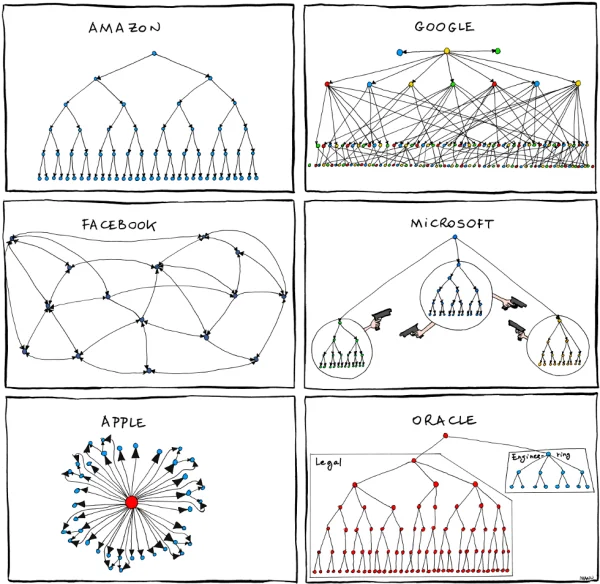
In just two years, my team, my mission, and my projects were completely overhauled three times.
The first two re-orgs kept me within the Merchant org, working on similar projects, which honestly wasn’t too disruptive. My colleagues remained largely the same, and so did the work. However, last April, after six months of building a promising independent project, I was abruptly reassigned to the Commerce Search team.
This sudden shift occurred because our organization was projected to fall short of our annual QMV (Quality Merchant Value) growth target by a mere two percent—a devastating five percent instead of the required seven! Faced with this monumental, utterly catastrophic potential OKR shortfall, my manager was instructed to offer three engineers as tribute to the corporate deities and assemble a 'tiger team' (execs LOVE tiger teams) to salvage the situation. Very quickly I found myself relating to Chandler caring about the WEENUS.
This new Search domain was, to put it mildly, chaotic. As a core Google product with over 20,000 engineers and product managers, the codebase and development lifecycle were, frankly, overwhelming. I had envisioned engaging challenges demanding innovative solutions, but instead, I found myself engaged in the most rudimentary data science: making minute adjustments to an algorithm, running endless tests, analyzing marginal improvements, and repeating the cycle. This simple process was nevertheless completely marred in corporate red tape, as shipping any change that might harm Google’s golden goose was definitely not permissible.
Over the next 6 months, I quickly lost motivation and pride in my work. The project I was working on, that of refactoring the shopping query detection algorithm to better detect if a query had a shopping intent, was essentially glorified tech debt that had accumulated and was given to me as a tradeoff for all the feature work the rest of my time was allowed to work on by core Search teams.
I found myself working on projects that held no interest for me, using technologies I had no desire to specialize in, following workflows that contradicted my engineering goals, and tackling tasks too narrow in scope to demonstrate my value or advance my career. All of this unfolded within an atmosphere of pervasive fear and a profound lack of psychological safety for my job.
By May 2024, I knew I was going to leave Google; it was simply a matter of timing. I decided to wait until Google finalized my Green Card application, recognizing that securing a Green Card independently, without the backing of a massive corporation like Google, is essentially a lottery win—or, you know, marrying a U.S. citizen, which, would have been difficult given my painfully single existence at the time, and that Sanat had recently started a relationship so my backup wasn’t even an option. In August, as I was vacationing with my incredible family in the outskirts of Paris, I got a notification from my lawyers that the green card application had gone through, and that the card would be waiting for me in my mailbox by the time I got home. The wave of relief was immense. A 9 year journey of student and work visas, marked by its share of anxieties and triumphs, was finally concluding. And, most importantly, I was now free to resign.
Leaving Google (finally)
On February 28th, I received an email announcing my fourth re-org in three years. Two days later, my resignation was on my manager's desk.
Why Leave?
I believe I've painted an accurate picture of my time at Google, from which I hope you can glean my reasoning behind this decision. I do want to emphasize that I find myself in a uniquely privileged position at this moment. I have the financial flexibility to take a few months off, and I lack the responsibilities that come with family obligations. I don’t want to miss this potentially once in a lifetime opportunity.
I want to explore what truly brings me fulfillment in a 9 - 5 setting. Was it the tech industry itself that made me unhappy, or was it the corporate environment? Was the lack of creative freedom the primary obstacle? What does my mind naturally gravitate toward when it's not consumed by eight-hour workdays and corporate objectives? These are the questions I intend to explore over the coming months. While I recognize these questions are complex, and I probably won’t be getting an definitive answer over the next few months, I strive to understand myself better everyday.
Another significant factor is the relentless pace of the U.S. work culture. Especially on a visa, where joblessness for more than 30 days is untenable, I've been unable to take more than two consecutive weeks off since starting my career in 2020. I knew that job hunting while still experiencing burnout would be counterproductive. I needed an extended break to recharge before embarking on my next professional chapter.
As always, I’d love to hear what you think! Feel free to message me on anything (but the best way is probably through Signal)
— Xoogler out.